an 18-year-old's inner thoughts
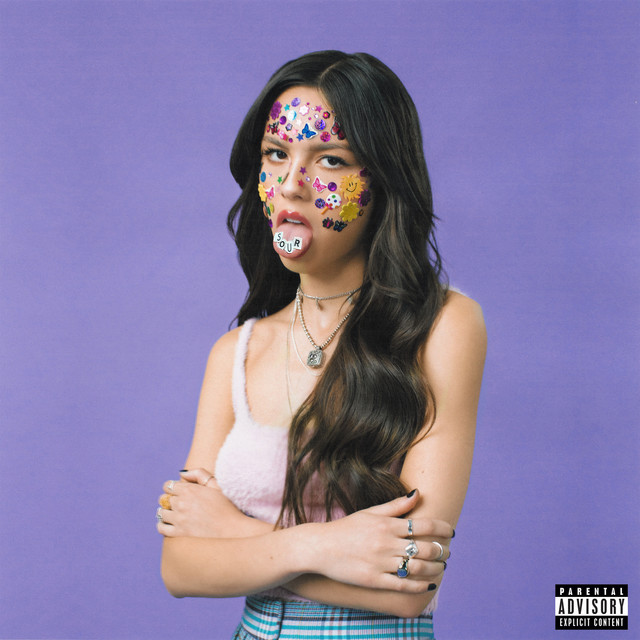
(image credits: Spotify)
There is so much beauty in being 17 and I wish everyone could see it. 17 is strange because it marks both a beginning and an end; the beginning of an inevitable entrance into adulthood, and the bittersweet ending to childhood. This challenging time naturally brings big emotions like insecurity, sadness, anger, and jealousy. But teenagers are so often misrepresented, and these emotions are made out to be “moodiness” and “irritability” rather than the complex feelings they truly are.
As a 17-year-old myself, I’ll admit that it is not easy to accurately capture the angst and emotion we all feel. But I can also say I’ve never felt quite as seen as I did when I first heard Olivia Rodrigo’s album Sour as a 17-year-old.
Sour debuted in 2021 and was written and published when Rodrigo was 17. This album is one of the most correct portrayals of a 17-year-old’s mind that I’ve ever experienced, and judging by the positive reception it got and continues to receive on social media nearly five years later, 17-year-old’s everywhere felt the same.
Rodrigo’s premiere collection perfectly encapsulates the journey through this confusing time by highlighting three key themes: chaos, processing, and reflection.
To state it plainly, 17 is chaos. At 17, you’re experiencing quintessential teenage moments and milestones like getting your license and enduring the academic pressure of junior year, the most grueling year of high school. Simultaneously, 17-year-olds are faced with huge emotions and experiences like heartbreak, losing friends, body dysmorphia, and a constant feeling that you’re never enough.
The first song on Sour, “brutal”, details the stress that comes with experiencing with all these emotions at once. Rodrigo talks about how much she dislikes herself, how often she compares herself to those around her, and how unseen and unheard she feels even when she’s screaming as loud as she can. The beauty of this song and what makes it so accurate, is that Rodrigo tells it like it is. Finally, an artist isn’t glamorizing the struggle. She is honest and curt about her feelings. She says, “I hate the way I’m perceived” and “I hate every song I write”; the repeated criticisms she voices are nothing but the truth. She says, “I’m not cool” and “I’m not smart”; the angst behind her words is that of pure, 17-year-old, insecurity.
Perhaps the most calmly chaotic song on this album is “drivers license”. It’s quippy and relatable title isn’t the only part that gives this song a classic teenage essence. “drivers license” is a ballad that combines the trademark 17-year-old experience of passing one’s drivers test with another trademark experience: the first breakup. When this song first came out as a single, it touched so many teenagers who felt unseen by the negative reimagining of their emotions in past media; media that saw teen breakups as “dramatic” and “overcomplicated”. “Drivers license” perfectly showcased the sadness of a breakup, while maintaining the youthful motif of the album through the integration of Rodrigo getting her license. She didn’t just make another breakup song; she created a space where teenagers could be seen for their emotions that are so often invalidated by adults.
Just like teenagers mature as they make their way to 18, the album progresses and suddenly the chaos turns into truth and the processing of the emotions teenagers often compress.
I would bet my life savings that if I gave a survey to every 17-year-old on the planet, 100% of participants would admit to being insecure. But it is seldom that people talk about their insecurity because they are insecure that they are feeling insecure (redundant, I know). Miss Rodrigo speaks for all of us in her songs “enough for you” and “jealousy, jealousy”.
“enough for you” explains the insecurity teenagers feel in their first go-arounds with love. Rodrigo exposes how she altered her appearance and behavior to fit an image that was favored by the boy she liked. This experience is so vulnerable and truthful, and exactly what happens when you take an overwhelmed teen and put them in their first relationship. “jealousy, jealousy” is different, but equally as accurate. In this song, Rodrigo tackles the most unspoken emotion: jealousy. No one ever admits that they are jealous of people. To hear Rodrigo sing about needing to fit in and being jealous of people’s friends, cars, families, boyfriends, appearances, and just about everything else, made me think she might’ve actually opened up my brain and read my mind. Rodrigo’s fearlessness to say what she feels is what makes her so special: she says what everyone else is thinking.
Emotions like insecurity and jealousy will forever be present in our minds, no matter how old we are. But, when we can process them and talk about them, like Rodrigo did, we can start to reflect.
The last song on Sour is just that, a reflection. It represents the last stage of childhood and the soul-searching we do right before adulthood rolls around so that by the time we can vote and put trust in others, we know who we are first. “hope ur ok” is the title of the final song, and it is arguably the most transformative of the 11 pieces. In this song, Rodrigo reflects on people she knew from her childhood: a boy who was mistreated by his family and a girl who was forced to grow up faster than her friends. Rodrigo recounts their lives and claims that she hopes they are okay now that they are older.
To me, this song isn’t really a reflection of other people’s lives, but instead it is an opportunity for Rodrigo to go back and realize that while she was feeling so lost and alone at 17, her experience wasn’t singular and everyone else was feeling that way too. This song flawlessly wraps up the album. Olivia’s realization that she wasn’t alone, serves as a reminder to all her listeners that they aren’t alone either. I didn’t understand this song until I was 17. I finally get it; it’s okay to feel big things and sometimes you disregard what everyone is feeling because you are blinded by your own emotions. When you finally are able to process how you have been feeling, you realize that you were never really alone.
And just like that, the transition from confused, to sad, to evolved, carries us through the album, just like it will carry us through 17. Underneath all the struggle and tears and anger, 17 is such a roller coaster and anthologies like Sour are the unsung heroes that carry me and continue to carry 17-year-olds through this transformative and complex time. But we’re just “moody” and “irritable” still, right?
Designed with WordPress
 maddifestations
Leave a comment